Integrated decarbonisation and environmental due diligence for real estate assets — combining engineering, climate science, and financial modelling into a single investment-grade report
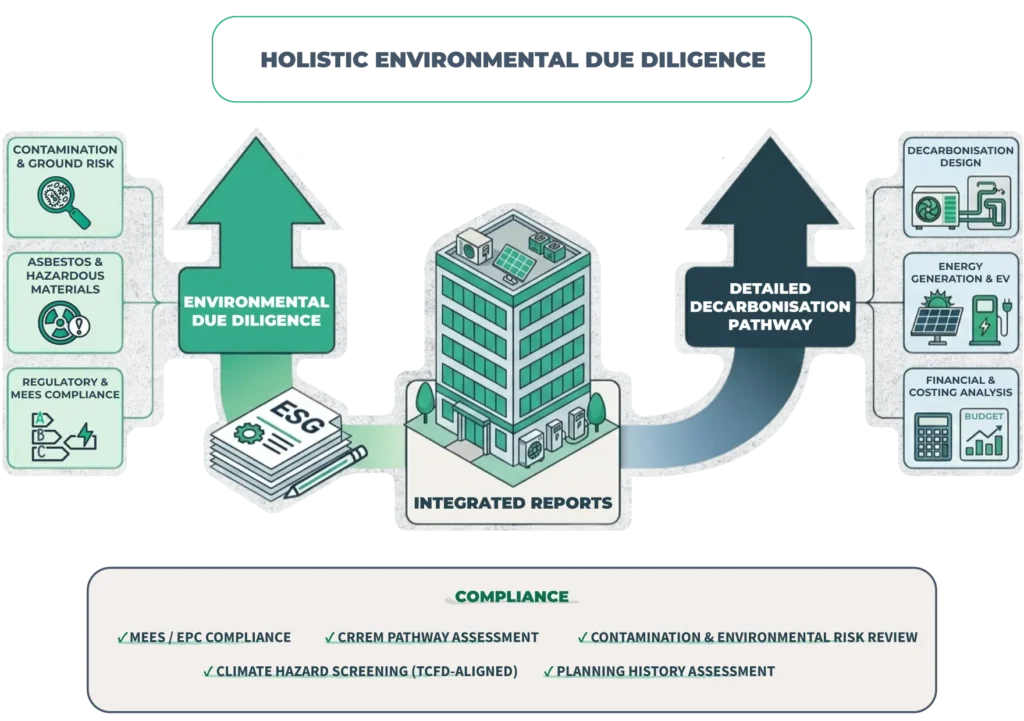
Terra Instinct delivers holistic environmental due diligence and decarbonisation strategy reports at the asset level. We bring together site surveys, environmental and contamination risk assessment, decarbonisation design, financial modelling, and climate risk analysis in a single report – giving you a clear picture of environmental and regulatory risk, stranding risk, and the value-add available from green interventions.
What the report covers
Key Findings Dashboard
EPC ratings, ESG risk flags, power supply constraints, destranding strategy, and EV charging opportunities, all at a glance.
Decarbonisation of Heat
Existing system audit, heat pump sizing and design (ASHP), scope of works, and system integration plan.
Energy Generation
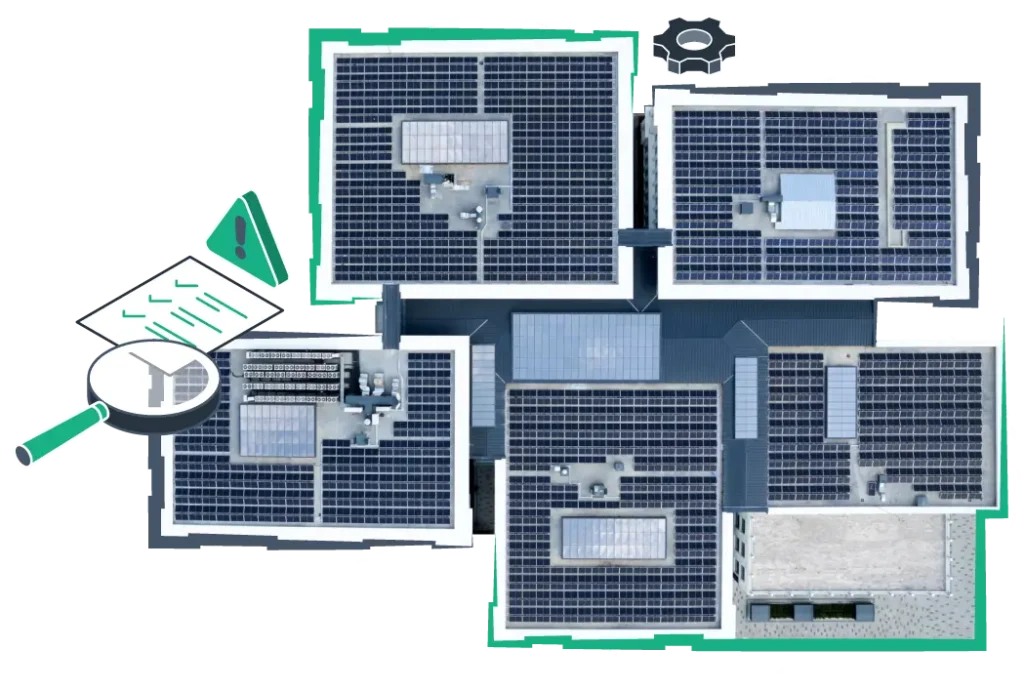
Rooftop solar PV feasibility, panel layout, generation modelling (P90), direct consumption vs. export analysis.
Electric Vehicle Charging
Excess solar utilisation strategy, rapid charger specification, revenue modelling, and scalable deployment plan.
Energy Efficiency
LED lighting upgrades, heating modernisation, energy monitoring infrastructure and sub-metering philosophy (GRESB-ready).
Financial & Costing Analysis
Full CapEx schedule (materials, labour, EV/BESS), IRR and NPV modelling, cumulative returns, tenant savings, and energy savings over a 30-year horizon.
Regulatory Review
Planning history, Environment Agency data, MEES compliance assessment, EPC trajectory to 2027/2030.
CRREM Pathways Assessment
Carbon intensity benchmarked against the 1.5°C CRREM pathway, stranding risk quantified, net zero alignment year projected.
Climate Risk Analysis
Physical climate hazard screening under TCFD/ISSB (RCP 2.6–8.5), covering drought, flood, storm, hail, and heat stress.
Environmental due diligence and a decarbonisation strategy in a single investment-grade report — showing you what the building is, the risks it carries, what it could become, and what it is worth in transition scenarios.