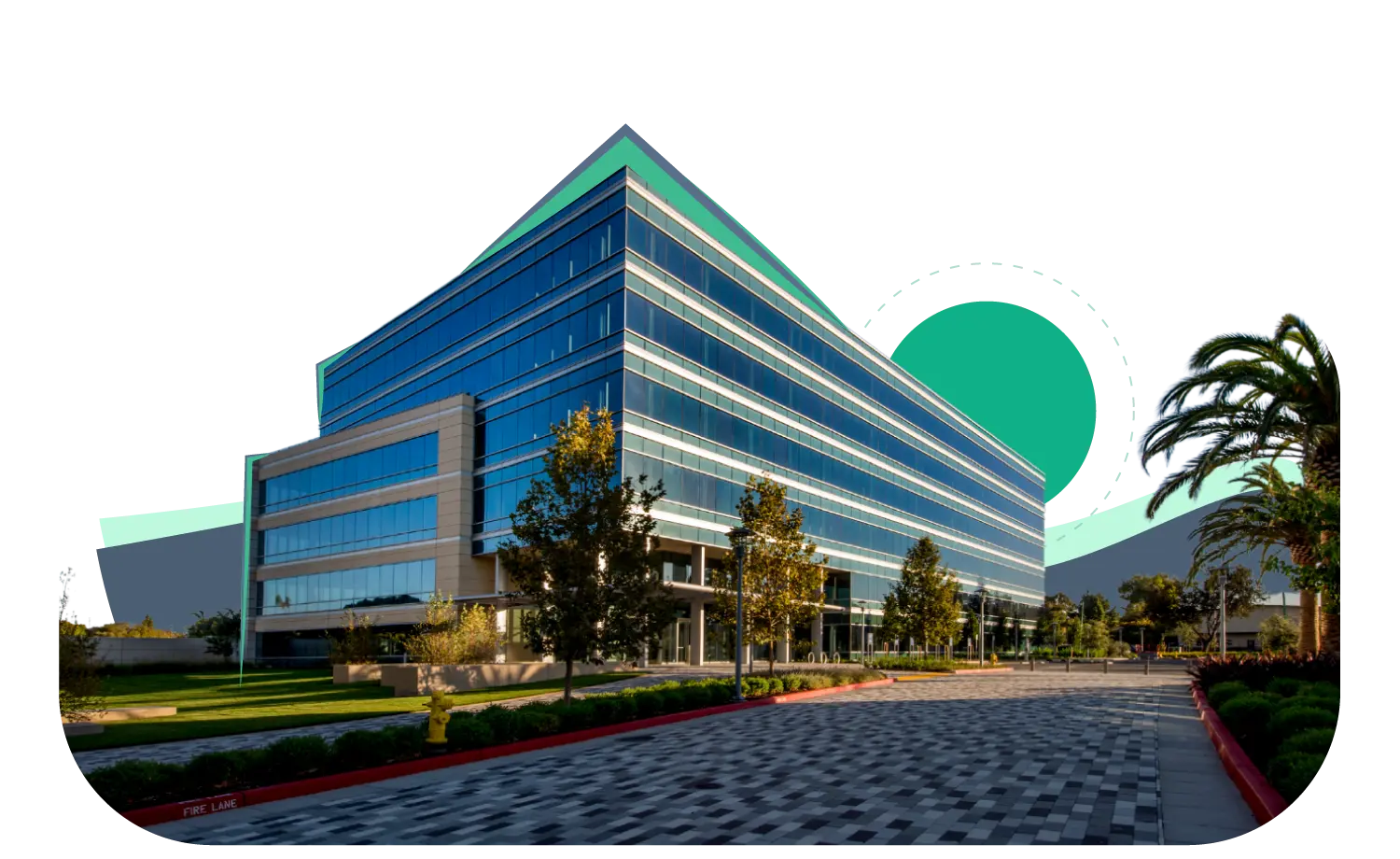
Taking real estate from strategy to a decarbonised, optimised, higher-value asset.
Strategy
Decarbonisation roadmap & business case
Engineering Design
Technical design & system optimisation
Install
Project delivery & technology installation
O&M
Operations & maintenance services
Asset Management
Performance, optimisation & lifecycle value
The Challenge
Occupied buildings where disruption is the #1 objection
Why offices are hard
Occupied, multi-tenant buildings where disruption risk is the #1 objection. Effective space heating is our primary concern — and it has to happen with tenants in place.
Electrical Infrastructure Expertise
We specialise in high-voltage and low-voltage electrical infrastructure capacity reviews — full intrusive survey work, with the corresponding remedial works to extend the asset's life cycle.
What We Survey
✓ Existing MEP system condition
✓ Grid capacity
✓ Tenant zones & metering
✓ AI-assisted analysis of consumption patterns and system sizing
✓ Plantroom space & routing for new equipment
The Solution
Retrofit in place, meter by zone
Heat pump + controls
Weather compensation drives space-heating efficiency, with a thermally decoupled (plate-HX) arrangement that protects new plant from degraded loop water.
Zone metering
Ultrasonic flow metering per tenant zone — bill for exactly what's used.
Solar
Rooftop solar where roof area allows — cutting electricity costs.
VRF cooling
Zoned comfort cooling with heat recovery — moving heat from warm zones to cool ones, tenant by tenant.
50%+
of Central London office stock sits below EPC B today — where the lettability and value argument lands hardest.
The TI Difference
The strongest destranding story — we model the full retrofit pathway, from EPC rating to net zero
so landlords and asset managers can phase investment around lease events and avoid costly rework.
The Commercial Case
Decarbonisation that pays for itself
Same technology, same minimal-disruption install — a commercial model to suit your balance sheet.
Asset Management
Decarbonising lifts the EPC, protects lettability against tightening MEES, and increases asset value.
The money works two ways
A positive IRR for landlords (recovered through tenants), or significant OpEx savings with a short payback for owner-occupiers.
Heat as a Service
Pay for the heat delivered, not the fuel into the plant.
Solar + EV everywhere
Maximise rooftop solar to cut CapEx and grid draw; add EV charging with a commercial model where it sells.
Funding
Two ways to fund your decarbonisation
Same technology, same minimal-disruption install — a commercial model to suit your balance sheet.
Option 1
Zero CapEx
Fully Funded
TI funds, installs, owns and maintains the system — decarbonisation delivered at no upfront cost, with lower operating costs for your tenants and no capital commitment on your balance sheet.
Option 2
You Own the Upside
CapEx Upfront
You fund the capital and retain 100% of the returns — landlords recharge the value through to tenants; owner-occupiers capture it as OpEx savings with a 5–8 year payback on a 20–25 year asset life.
Ready to destrand your office portfolio?
It starts with a free desktop review — we assess your asset and energy data and show you exactly what decarbonisation could deliver. No obligation, no cost, no complexity.
What owners ask us most about decarbonising commercial offices.
Who can help decarbonise a commercial office building in the UK?
Terra Instinct takes UK commercial offices off gas with one team covering the business case, survey, design, installation and maintenance. It starts by measuring the building's real electrical capacity, then replaces gas boilers with high-temperature heat pumps and adds solar and batteries where they pay back, all run by its own energy management system (EMS). At Radius House, a 41,000 sq ft office in Watford, 300kW of heat pumps went in over 6 weeks, with no grid upgrade and tenants undisturbed. Owners can fund the works themselves or choose Energy as a Service, with £0 upfront.
Can I replace my office's gas boiler with a heat pump and keep the radiators?
Usually, yes, if you use a high-temperature heat pump. Standard heat pumps run at lower water temperatures than a gas boiler, so existing radiators can struggle to heat the space unless they are enlarged or replaced. Terra Instinct's high-temperature heat pumps reach up to 80°C, so radiators and pipework can often stay. That is exactly what happened at Radius House, a 41,000 sq ft office in Watford: 300kW of high-temperature heat pumps at 80°C flow, installed in 6 weeks with no grid upgrade and tenants undisturbed. A survey of your heat loss and existing system confirms whether yours can stay.
EPC B, if the office is privately rented, larger than 1,000 square metres and in England or Wales. In its June 2026 interim response, the government confirmed it intends to raise the minimum standard for these buildings to EPC B from 2031, where cost-effective, and dropped the earlier proposal of EPC C by 2027. Rented offices under 1,000 square metres stay at the current minimum of EPC E. The change still needs secondary legislation, with more detail due in a full government response. Terra Instinct works out the lowest-cost route to EPC B for each office, asset by asset.
Assess the building now, then plan the works backwards from your lease events and voids. For most offices, taking out the gas boilers moves the rating furthest: high-temperature heat pumps replace them, with solar, batteries and an energy management system added where the roof and electrical capacity allow. More than half of Central London office stock sits below EPC B, so contractor capacity is likely to tighten as 2031 nears. Terra Instinct plans each retrofit around lease events so tenants stay in place, and can fund the plant under Energy as a Service with £0 upfront.
Do I need a grid upgrade to put heat pumps in my office?
Often not. Many offices have more spare electrical capacity than their original connection agreement suggests, and solar, batteries and smart control can close the remaining gap. A grid upgrade from the local network operator (DNO) typically costs £100–350k per building, and reinforcement can take 6–10 months before work starts, with some DNOs now quoting connection dates as late as 2035. Terra Instinct measures the real headroom on site before anyone pays for a bigger connection. At Radius House in Watford, 300kW of high-temperature heat pumps went in with no grid upgrade.
Do I need to replace old switchgear before I electrify my office?
Not on age alone. Ofgem, CIBSE, BEAMA and the HSE all say age is not a reason to replace electrical equipment, and switchgear has a recorded service life of 40+ years against the 25–30 years in standard guide tables (CIBSE Guide M). Intrusive testing opens the panels and measures their real condition, so you replace only what is faulty. At a 130,000 sq ft Grade A office in North London, the owner had been quoted £1.1M for full switchgear and transformer replacement. Terra Instinct tested 59 assets, found 23 faults (5 critical) and fixed them for £150K, saving over £950K with no full-building outages.