

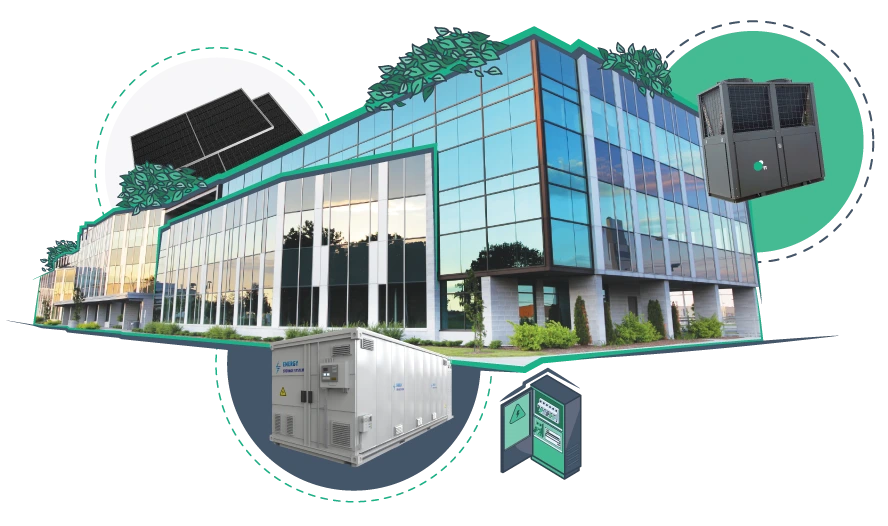

“We’re replacing the gas boilers”
Heat pumps move the heating load onto electricity, and the connection wasn’t sized for it.

“Tenants want EV charging”
A car park of chargers can double a building’s peak demand.

“A new tenant needs more power”
A fully let, higher-spec building draws more than today’s meter shows.

“The DNO quote came back huge”
You have a six-figure quote or a date years away, and need another option.
Grid Supply
Upgrade only when it pays
+

Solar PV
Power generated on site
+

Battery / BESS
Stores power and trims the peaks
=

Building demand
Electrified and fully let
 Strategy
The costed power plan and business case
Strategy
The costed power plan and business case
 Survey
Capacity measured on site
Survey
Capacity measured on site
 Design
Grid, solar, battery and EMS engineered together
Design
Grid, solar, battery and EMS engineered together
 Install
Delivered around the building’s occupants
Install
Delivered around the building’s occupants
 Maintain
Operated and optimised over the long term
Maintain
Operated and optimised over the long term
