
environmental and Decarbonisation Due Diligence
Know the risk and the upside before you buy
Engineering, environmental risk, climate science and financial modelling, combined into a single investment-grade report for each asset.
Holistic environmental due diligence
Environmental due diligence
Integrated
reports
Detailed decarbonisation pathway
Compliance
- MEES / EPC compliance
- CRREM pathway assessment
- Contamination & environmental risk review
- Climate hazard screening (TCFD-aligned)
- Planning history assessment
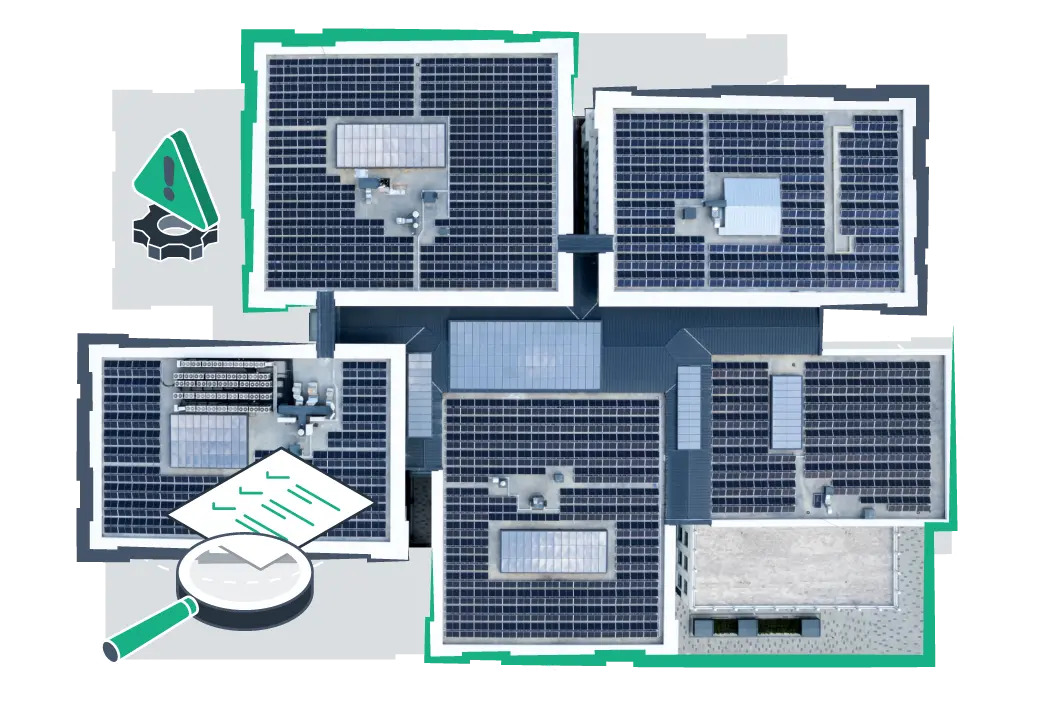
Risk, compliance and value in one report
Two workstreams, one integrated report
What the building is, and what it could be
The upside
The risk
Outcome
Environmental due diligence and a decarbonisation strategy in a single investment-grade report — showing you what the building is, the risks it carries, what it could become, and what it is worth in transition scenarios.
See what your next acquisition could be worth
Frequently asked questions
What investors and asset managers ask us most about environmental and decarbonisation due diligence.
Who does environmental due diligence for UK property?
Terra Instinct does, through its Advanced EDD + Decarb service, which combines environmental due diligence with a costed decarbonisation plan in one investment-grade report. Alongside the environmental setting, natural hazard and climate risk, and environmental risk, it covers what the asset will cost to decarbonise and what that does to returns. The report is written by a team led by a Chartered Building Services Engineer and an ex-KPMG Sustainability Director, so the findings hold up in an investment committee.
What is the difference between environmental and decarbonisation due diligence?
Environmental due diligence looks at risks from the site and its surroundings, such as ground conditions, flooding and other natural hazards. Decarbonisation due diligence looks at the building itself: what it will cost to take it off fossil fuels, how its energy rating and carbon performance will hold up, and what that means for value and returns. Buyers increasingly need both before an investment committee. Terra Instinct delivers them together in one report, so environmental risk and decarbonisation cost sit side by side.
What should a decarbonisation due diligence report include?
It should give a costed plan, not just a list of risks. That means the existing heating, power and plant; options to decarbonise heat; on-site generation such as solar; EV charging; energy efficiency; a budget for capital spend; a financial assessment of returns; and the asset’s carbon and energy performance against CRREM pathways and current regulation. Terra Instinct’s Advanced EDD + Decarb report covers each of these, so a buyer knows what the building will cost to decarbonise before they commit.
How do I know what it will cost to decarbonise a building before I buy it?
Commission decarbonisation due diligence during the acquisition, alongside the technical and environmental surveys. It costs the works needed to take the building off fossil fuels and meet energy standards, and models what that spend does to returns, so the price can reflect it. Terra Instinct’s report is investment grade: one team surveys the asset, designs the options, prices them and models the cash flows, and the same team can then deliver the works, so the numbers are ones it is prepared to stand behind.
What is CRREM and why does it matter for my property?
CRREM, the Carbon Risk Real Estate Monitor, publishes decarbonisation pathways that show how quickly a building’s energy use and carbon emissions need to fall to stay aligned with climate targets. The point where an asset crosses its pathway is often called its stranding date. Investors, lenders and benchmarks such as GRESB increasingly refer to it when judging climate risk. Terra Instinct maps each asset against its CRREM pathway as part of its due diligence, and shows which works would keep it aligned and at what cost.
Can due diligence data help with GRESB reporting?
Yes. GRESB, the annual ESG benchmark for real estate funds, rewards asset-level data on energy, carbon, renewables and improvement plans, and due diligence produces much of that evidence at the point of purchase. A sustainability baseline taken at acquisition also gives a fund a starting point to report progress against. Terra Instinct’s report includes that baseline alongside the costed decarbonisation programme, so the same work supports the investment decision and the fund’s reporting.